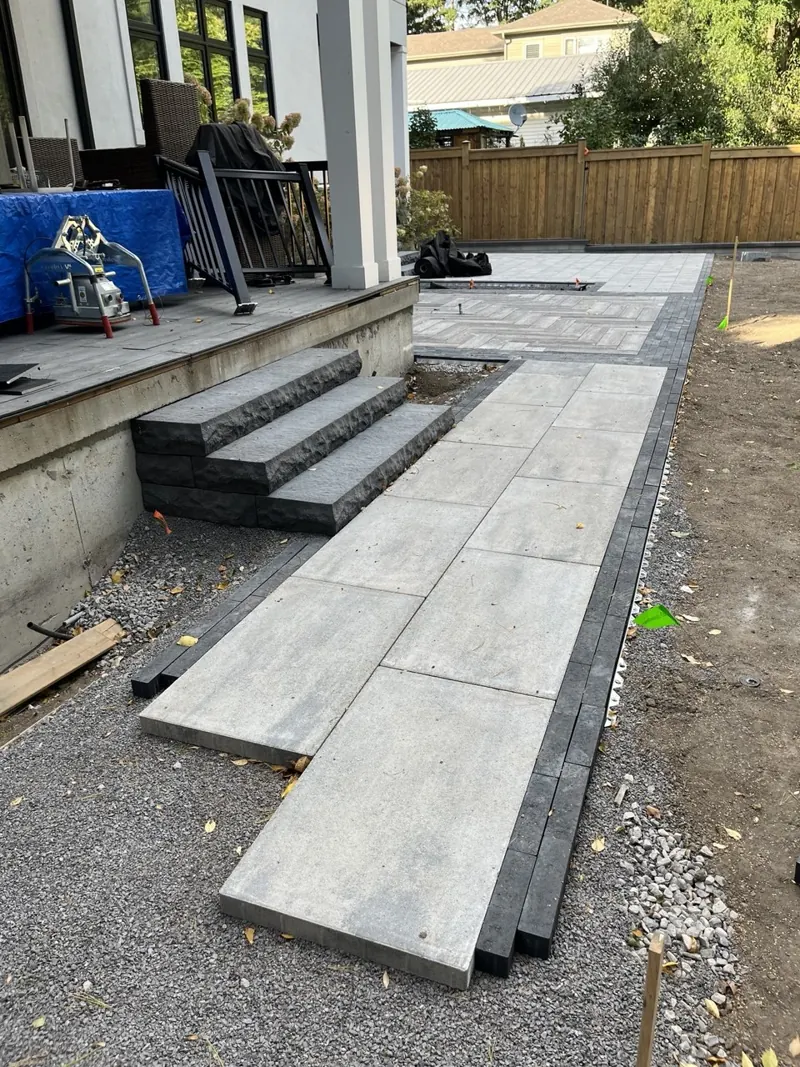
Interlock Repair & Releveling in Mississauga & the GTA
Sunken, rutted or heaved interlock lifted, rebuilt on a proper base and relaid, so the repair blends in and stays flat.
Priced per job. Small repairs can often be estimated from photos; larger releveling is quoted after a site visit. How we price
- 4.9★ Google (16)
- Family-owned
- 15 years
- Free estimates
- 4.9★16 Google reviews
- 15years in business
- Familyowned and run
- Freeon-site estimates
Overview
Sunken or heaved interlock is usually a base problem
Pavers themselves are tough; concrete pavers rarely crack or wear out under normal use. When interlock goes wrong, it's almost always what's under them: a base that was thinner than it should be, gravel that was never compacted, water finding its way below the surface, or an old trench, stump or root that has settled or rotted away.
That's good news, because it means the surface can be fixed without throwing anything away. We lift the pavers in the problem area and stack them in order, dig out the soft or contaminated base until we reach firm material, and rebuild it with fresh gravel compacted in lifts. Then the same pavers go back in their pattern, cuts and edges are restored, and polymeric sand locks the joints again. Because your own pavers return, the repair matches the rest of the driveway or walkway far better than a patch of new stone ever could.
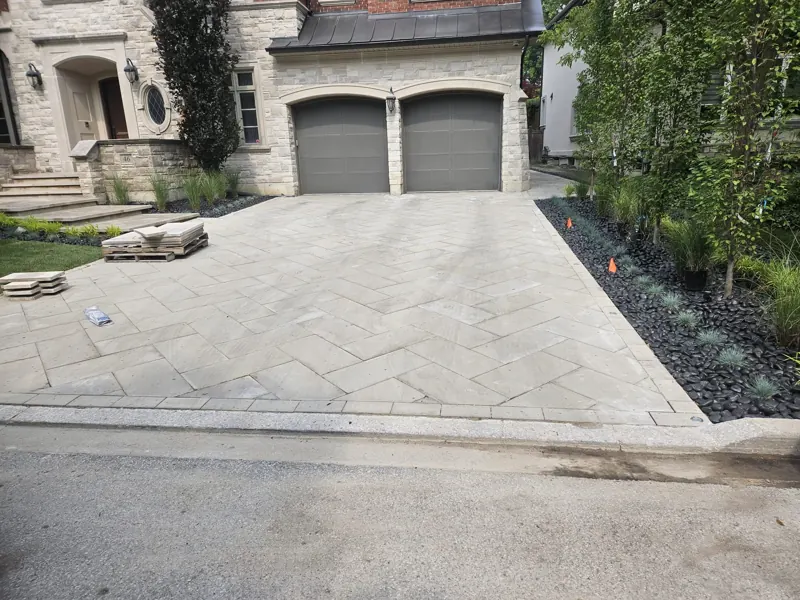
What's included
What an interlock repair includes
- Lifting and stacking the existing pavers for reuse
- Digging out and rebuilding the failed base, compacted in lifts
- Relaying, cutting and edge restraint, then fresh polymeric sand
Free on-site estimate and a clear written quote before any work starts.
How we do it
Find the cause
We check the dip, the drainage around it and how deep the original base goes.
Lift the pavers
The affected area is taken up and the pavers stacked for reuse.
Rebuild the base
Failed material comes out and new gravel goes in, compacted in lifts to the right depth.
Relay and lock
Pavers go back, edges are restrained, and polymeric sand locks the joints.
Reading the damage: what each symptom usually means
- Ruts in the tire tracks: the base under the wheel paths was too thin or poorly compacted for the weight of cars. The repair digs deeper there than the rest.
- A dip in one spot: often a settled utility trench, a rotted stump or a broken drain pipe under the surface. We find the cause before rebuilding so it doesn't sink again.
- Pavers spreading at the edge: missing or failed edge restraint. Without it, the outer rows creep into the lawn and the joints open up.
- Heaving or a hump after winter: water trapped in the base freezing and expanding, sometimes helped by a tree root. Drainage and depth both need correcting.
- Sinking next to the house or steps: backfill around the foundation that settled for years after the house was built, or a downspout soaking that area.
- Weeds and open joints only: no base problem at all. Cleaning out the joints and refilling with polymeric sand may be all it needs.
What decides the price of an interlock repair
We price repairs per job because two repairs of the same size can be very different underneath. The main things that move the price are: the area to lift and relay; how deep the failed base goes, since a soft spot from a rotted root needs far more digging than a shallow dip; whether the edge restraint needs replacing; how many pavers are broken and whether a matching paver is still made; access for equipment and for hauling out spoil; and whether a drainage problem, such as a downspout outlet, has to be fixed at the same time so the repair lasts.
Small, clearly defined repairs can often be estimated from photos. Larger releveling, or anything where the cause isn't obvious, needs a quick look on site. Either way, you get the price in writing before we lift a single paver, along with our honest view on whether repair or a full rebuild is the better use of your money.
Getting a price from photos
The fastest way to a number is three photos and a rough size sent by text to 437-299-1681. Take one wide photo showing the whole driveway or walkway, one close-up of the worst area with a shoe or tape measure in the frame for scale, and one of where your nearest downspout drains. Add the length and width of the problem area in feet; pacing it out is accurate enough.
From that we can usually tell whether it's a contained repair, a releveling of a larger section, or a sign that the whole base needs rebuilding. If the photos point to a simple fix, we reply with a range. If they raise questions, such as a dip that might be a broken pipe, we'll book a free visit to check before committing to a price.
How we build it
The details that make it last.
Fix the cause, not the surface
Sinking comes from a weak or wet base. We rebuild that, so the dip doesn't come back.
Same pavers, so it blends
We reuse your pavers wherever they're sound, so the repaired area matches the rest.
Honest repair-or-replace advice
If most of the driveway is moving, a rebuild costs less over time, and we'll say so.
Joints locked again
Fresh polymeric sand keeps water and weeds out of the repaired area.
Our work
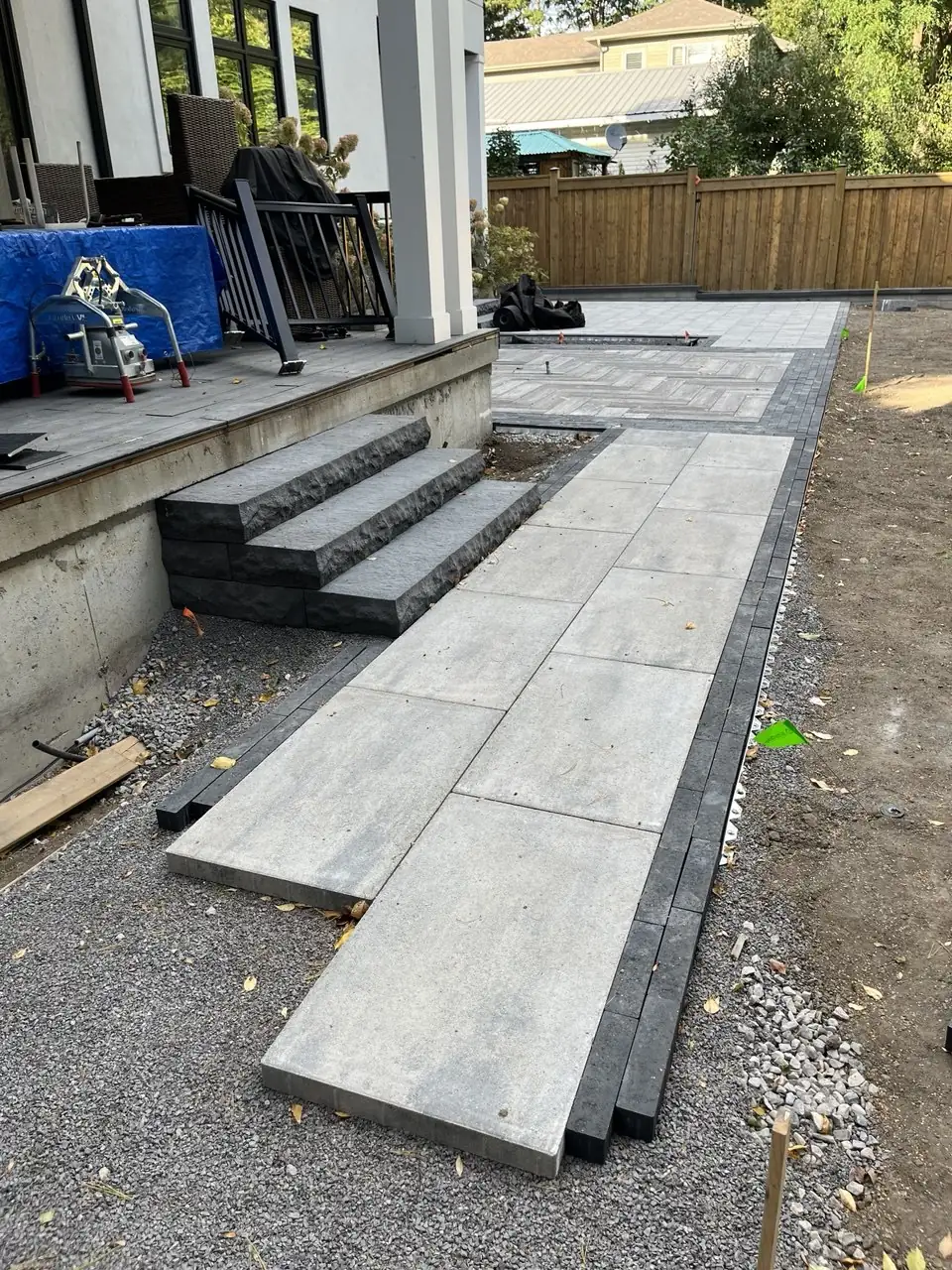
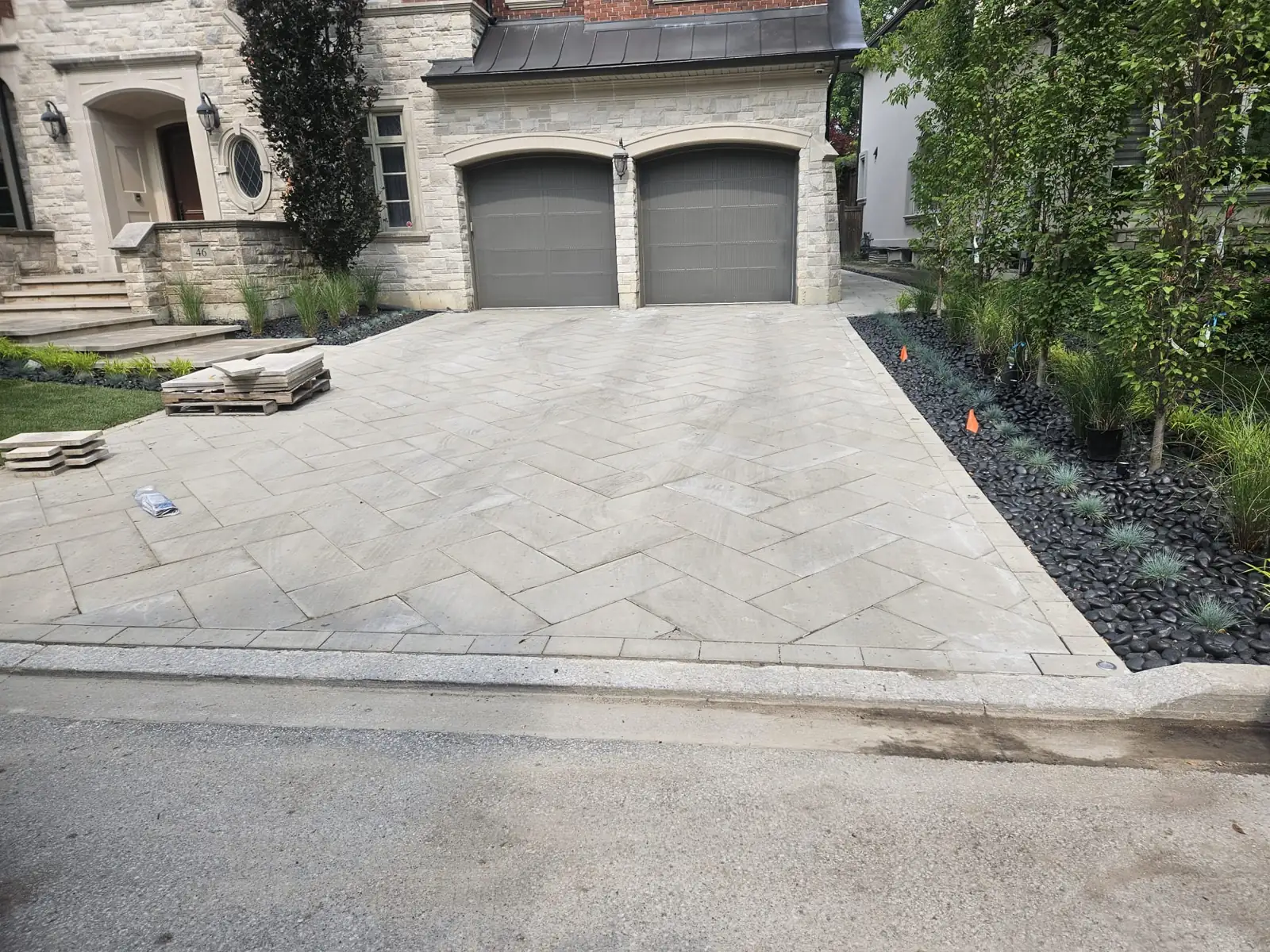
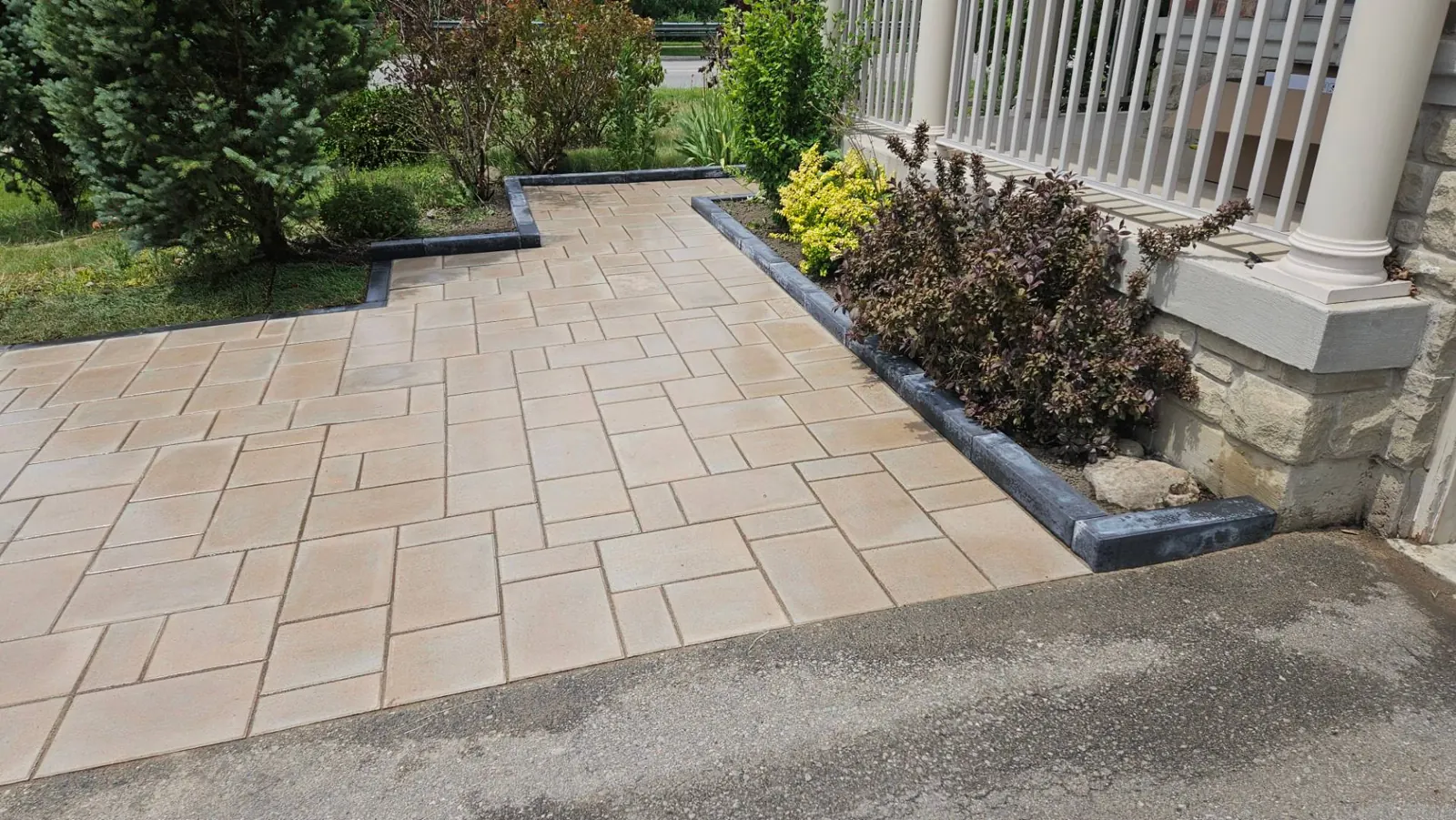
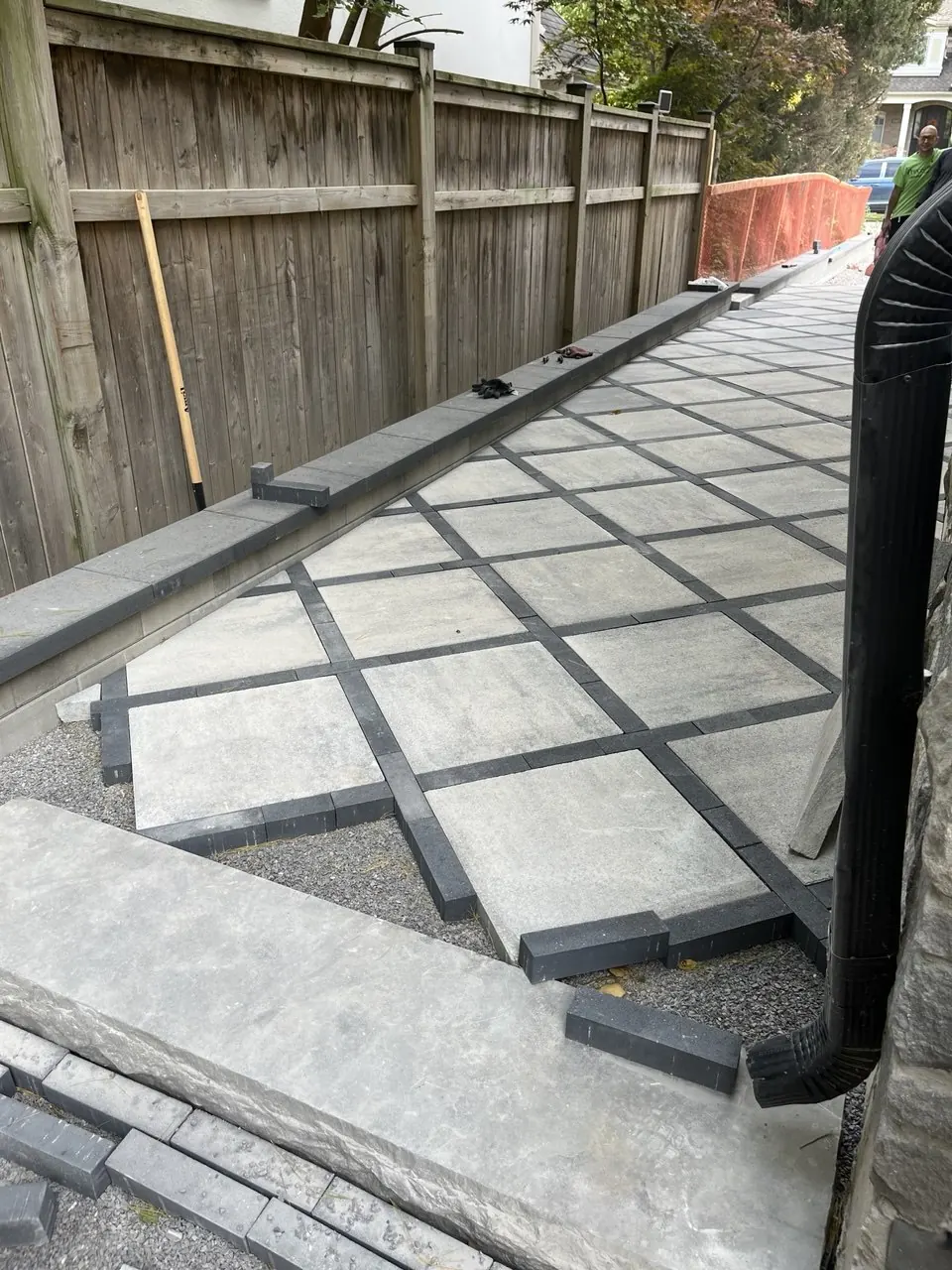
Recent work.
Ballpark by text
Text us 3 photos for a ballpark.
Not ready for a site visit? Send three things by text and we'll reply with options and a rough range. The exact price is confirmed on a free visit. Prefer email or a form? Use the contact page.
A wide photo
From the street or the far side of the yard, so we see the whole area.
A rough size
Length and width in feet. Pacing it out is fine: one big step is about 3 ft.
What you'd like
Replace, widen, level, plant, or just "make it look better".
Service area
Interlock Repair & Releveling across Mississauga, Etobicoke, Toronto & Oakville.
Based on the Mississauga–Etobicoke border, we work all over the west GTA, including Toronto and Oakville. See all service areas
How it works
One crew, start to finish.
Call or text
Tell us about the project or text a few photos. We reply within one business day.
Free site visit
We measure, check grades, drainage and access, and talk through options.
Written quote
A clear, itemized quote, with no pressure and no surprises.
Build and walk-through
One crew builds it start to finish, then we walk it with you.
Reviews
What homeowners say.
16 Google reviews
“Absolutely amazing job by the team. I love the result.”Danylo H. · Google review
“The guys are professionals, you can tell when people know what they're doing.”Yurii A. · Google review
“The guys are real professionals, they know what they are doing.”Oleh K. · Google review · Translated from Ukrainian by Google
FAQ
Interlock repair: questions before you book
How much does interlock repair cost?
Priced per job. Small repairs can often be estimated from photos; larger releveling is quoted after a site visit. We give you an exact written quote before any work starts.
Why is my interlock driveway sinking?
Usually a thin or poorly compacted base, water getting under the pavers, or an old trench or tree root that settled. The pavers themselves rarely fail.
Can you reuse my existing pavers?
Usually yes. We lift them carefully, set them aside, and relay them once the base is rebuilt. Broken pavers are replaced with the closest match available.
Repair or replace the whole driveway?
If the problem is a local dip, rut or lifted edge, repair it. If the whole surface is uneven or the base was never built properly, a rebuild is usually better value.
Do you fix interlock walkways and steps too?
Yes. Sunken walkways, tilted landings and loose steps are repaired the same way: lift, rebuild the base, relay.
How fast can you send a price?
Text 3 photos and a rough size to 437-299-1681. Small repairs can often be estimated from photos; bigger ones need a quick site visit.
How much does interlock repair cost?
It's priced per job after we see it, either from photos or on site, because cost depends on the area, how deep the base failure goes, edge restraint, broken pavers and access. You get a written price before any work starts.
Will sealing fix sinking pavers?
No. Sealer protects the surface and joints but does nothing for a base that has settled. Sunken or heaved areas need the pavers lifted and the base rebuilt.
Is fall a good time for interlock repair?
Yes. Repairs can be done any time the ground isn't frozen, and fixing a dip before winter stops water collecting in it and freezing, which makes the damage worse by spring.
Read before you hire
Related guides.
Free estimate
Tell us about your project.
Send the basics and a photo if you have one. A real person replies within one business day.
- 01We call or text back to understand the job.
- 02Free on-site visit to measure and check grades.
- 03A clear written quote. No pressure.